Growth & Customer Value
Enable better customer experiences, faster innovation, digital growth, and technology-enabled business expansion.
AI · Data · Customer experience · M&ATechnology leadership in practice
Technology leadership creates value when it connects business ambition to better growth, higher productivity, stronger resilience, and the capability to keep improving.
Growth · Productivity · Resilience · Capability

Global perspective.
Practical transformation.
A business-first lens
Lavlesh Lamba is a global technology executive focused on helping complex, multinational organizations turn technology decisions into business value. His experience spans global IT strategy, AI and digital transformation, cybersecurity, ERP modernization, M&A, IT/OT convergence, and globally integrated operating models.
His work is grounded in a simple question: what does the business need technology to make possible—and what operating model, capability, and discipline are required to deliver it?
Technology leadership should improve growth, productivity, resilience, and organizational capability at the same time.
The enterprise technology agenda
These levers provide a business-centered way to think about technology strategy. The capabilities underneath them may change; the outcomes remain central.
Enable better customer experiences, faster innovation, digital growth, and technology-enabled business expansion.
AI · Data · Customer experience · M&ASimplify work through standardization, automation, business systems, and a globally integrated operating model.
ERP · Automation · Operating model · SimplificationProtect continuity through cybersecurity, governance, recovery, compliance, infrastructure, and IT/OT resilience.
Cybersecurity · GRC · AI governance · Identity · Recovery · IT/OTBuild the leadership, skills, adoption, and ways of working that allow transformation to scale.
Talent · AI literacy · Change · CollaborationSignature frameworks
These frameworks are drawn from the recurring patterns behind technology strategy, operating-model design, AI adoption, and transformation leadership. They are designed to help leaders make complexity actionable.
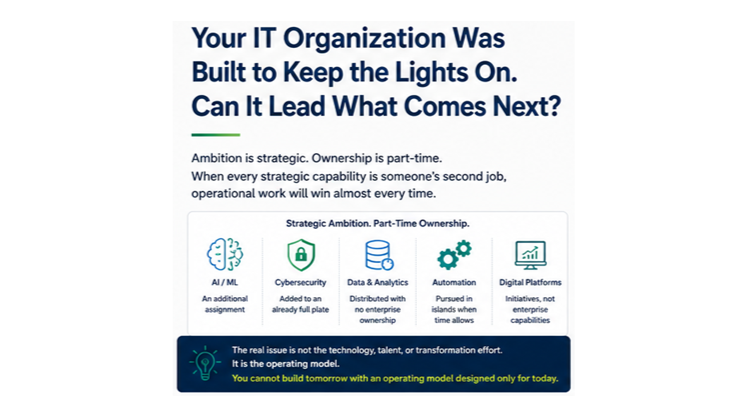 Operating model
Technology organizations must protect and operate today’s business while intentionally building the capabilities required for tomorrow’s business.
Explore the framework →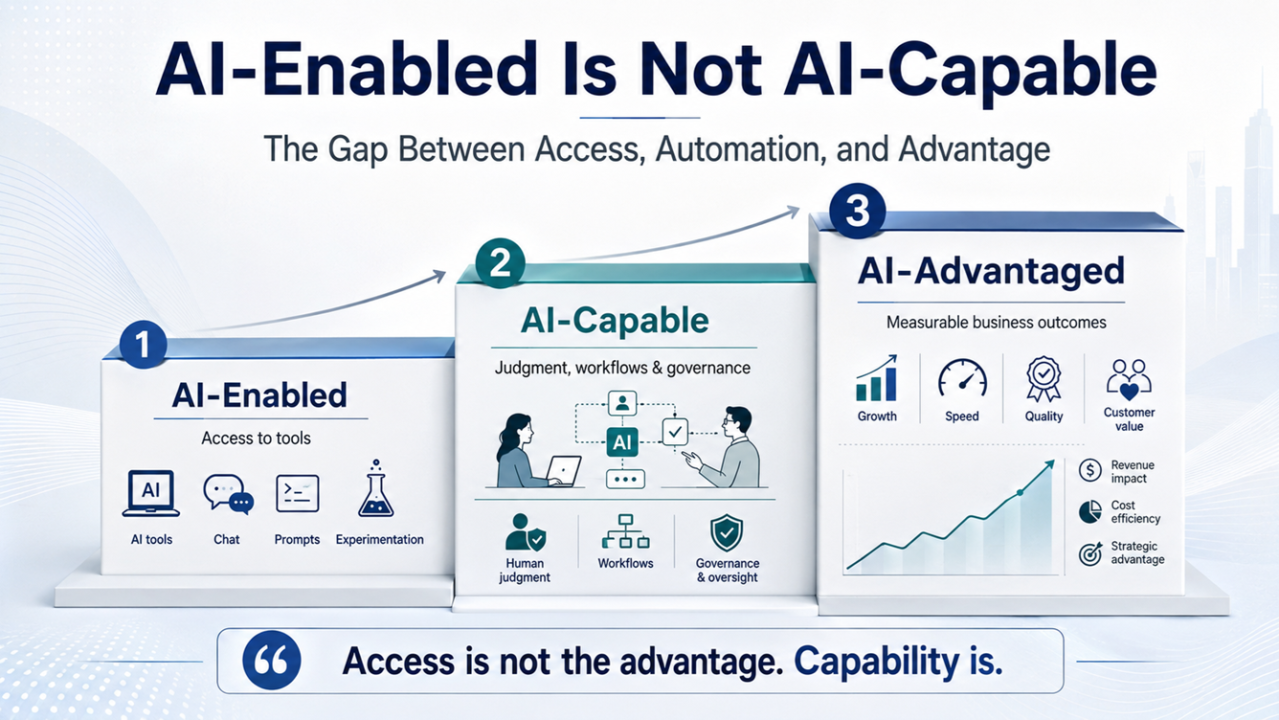 AI strategy
Start with the business objective, identify friction, evaluate AI’s role, integrate it into the workflow, and measure what matters.
Explore the framework →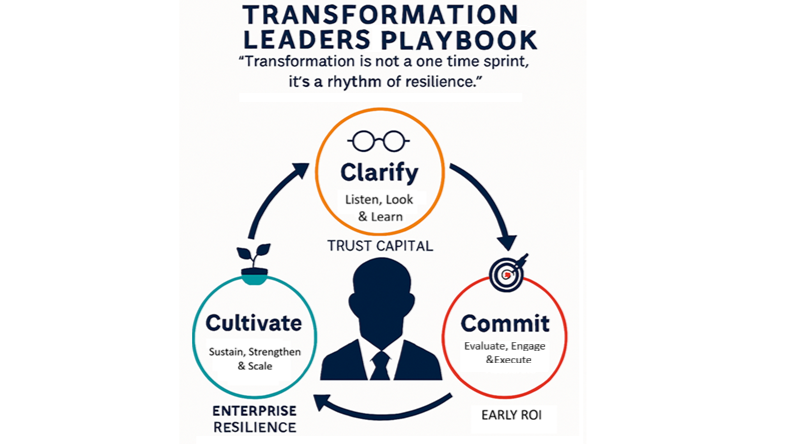 Transformation leadership
Clarify the reality, commit the organization to action, and cultivate the capabilities and rhythm that sustain change.
Explore the framework →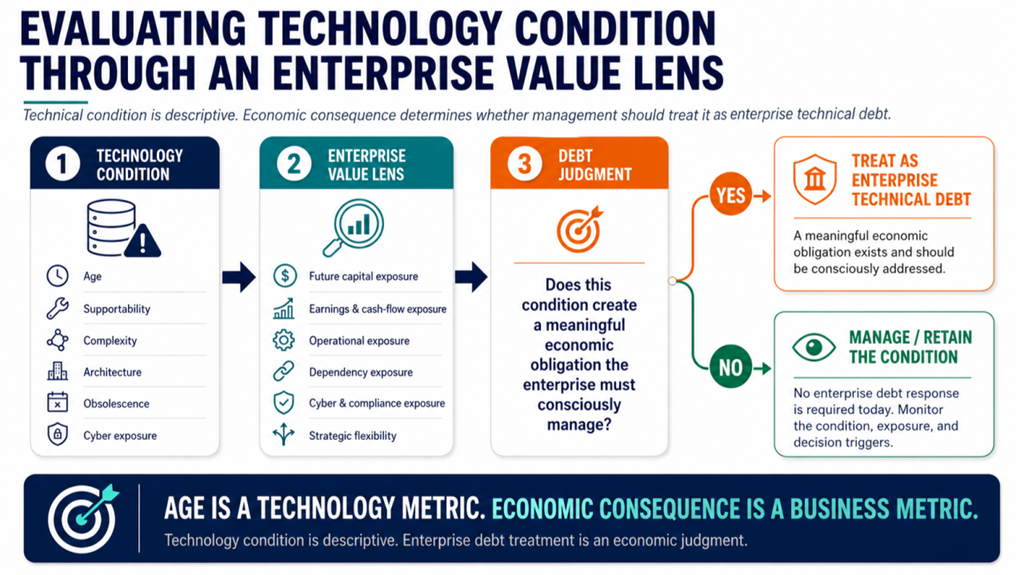 Enterprise value
Evaluate technology condition through economic exposure, materiality, strategic optionality, and enterprise value—not age alone.
Explore the framework →Supporting lenses
Additional ways to navigate integration, adoption, and the human side of transformation.
The work behind the outcomes
Technology leadership is measured not only by what is delivered, but by the ideas, systems, and operating conditions that make growth possible.
Patents, patent applications, publications, and invention disclosures spanning capacity optimization, automated order-to-production routing, AI, data, and digital operations.
Technology leadership across multinational manufacturing, aerospace, defense, healthcare, research, and private-equity environments—supporting 5,000+ users and $23M+ budgets.
Outcomes including 99% equipment uptime, a 90% reduction in manual transactions, and critical vulnerability exposure reduced from more than 50% to below 10%.
The numbers are not the story by themselves. They are evidence of stronger capacity to grow, compete, integrate, and scale.
Executive perspectives
These perspectives explore the choices leaders face when technology must improve the business—not simply operate the landscape.
Where technology becomes a source of better decisions, customer value, innovation, and enterprise advantage.
How leaders simplify complexity, modernize the digital core, and create a more effective way of working.
Technology decisions that protect continuity, trust, compliance, and the enterprise’s ability to absorb disruption.
Transformation depends on leadership behavior, capability building, adoption, and the human rhythm of change.
Leadership in practice
“Lavlesh made a significant contribution toward modernization, digitization and automation of key business processes in collaboration with the business while upgrading and modernizing our IT landscape.”
“Lavlesh inherited an extremely challenging systems and human environment. He successfully re-engineered both the IT organization and the overall IT system architecture into a well-run, high-functioning team and environment.”
“He contributed more than technology expertise. He guided business strategy, shaped corporate goals and fostered vendor relations.”
A leadership conversation
For board, advisory, transformation, and CIO leadership conversations.
Start a conversation